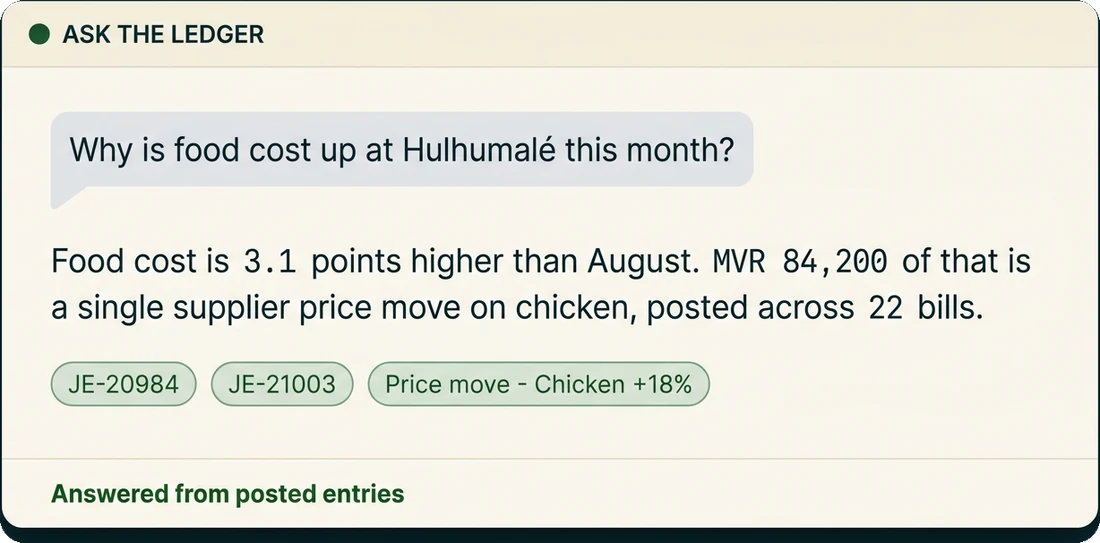
Every transaction posts itself, the second it happens.
A real double-entry ledger underneath the whole business. Sales, purchases, payments and stock movements post to the chart of accounts as they occur, not on a nightly sync you have to trust.
Multi-dimensional: account, outlet, project, department
Recurring and reversing journals
Drill from any balance to the document behind it
Bills route themselves through your approval rules.
Supplier bills arrive, get coded against the right accounts and dimensions, route through your approval rules, and land in the ledger and the payment run.
Rule-based approval routing
Bill coding that remembers how you coded it last time
Supplier aging that ties to the control account
The aging is always current, because the ledger is.
Invoices, receipts and allocations in one place, with aging that reconciles to the control account because it is the same ledger.
Allocation and reallocation against open invoices
Aging by customer, outlet or dimension
Credit notes that post the way an auditor expects
Rules clear the easy lines. You see only the exceptions.
Import the statement, let the rules match what they can, and work only the exceptions. Matches post straight to the ledger.
Rule-based automatic matching
Statement import with full transaction history
Transfers between your own accounts handled as one movement

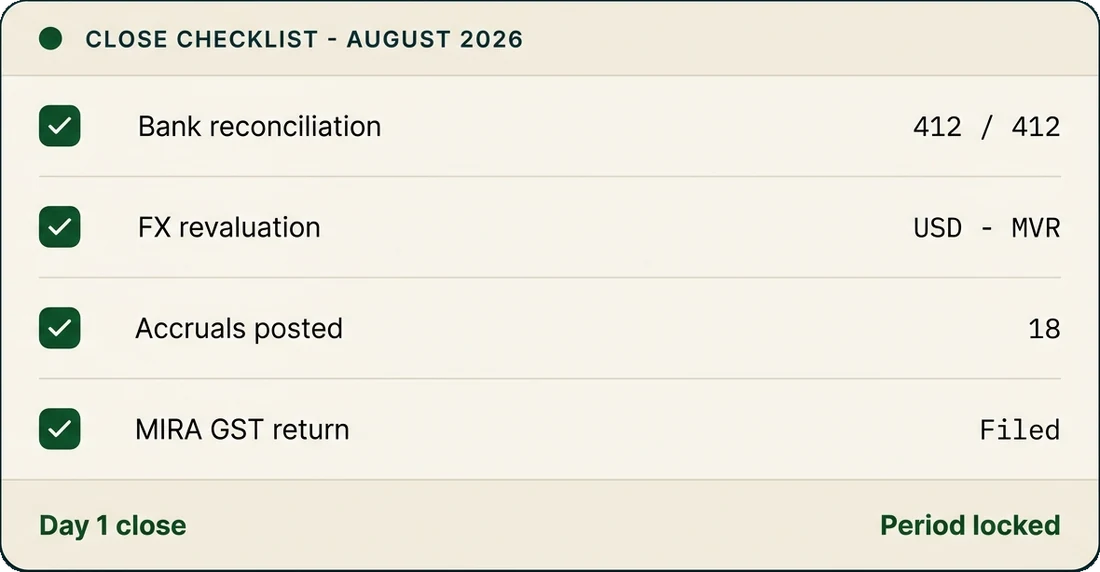
It knows what is done, and what still blocks the lock.
The period close as a tracked process: accruals, revaluation, reconciliations and locks, each with an owner and a state, rather than a spreadsheet somebody keeps on their desktop.
Close checklist with real completion state
Fiscal period locks
Accruals and automatic reversals
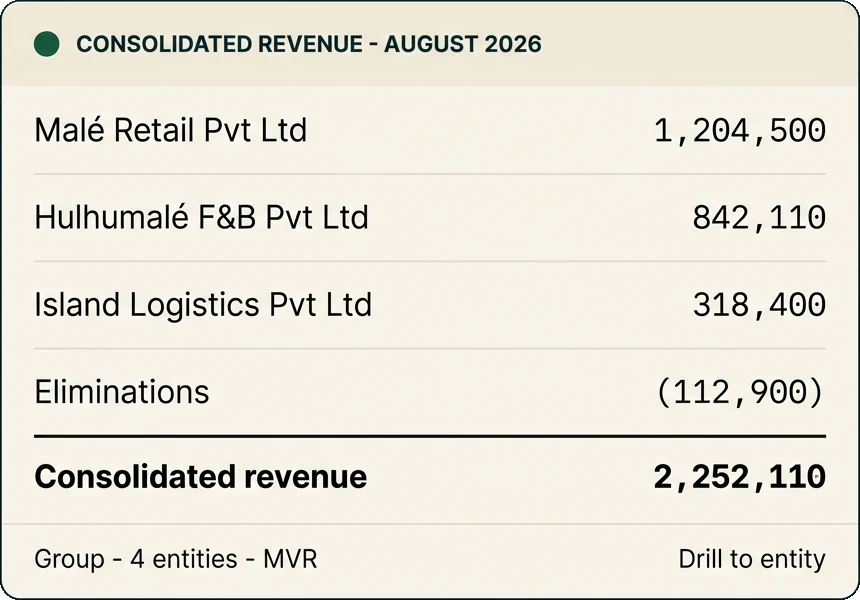
The group consolidates as the entities post.
Organisation groups roll up to a consolidated view, in one presentation currency, with intercompany eliminations handled rather than hidden.
Group and sub-group rollups
Presentation-currency translation
Entity-level drilldown from any group figure
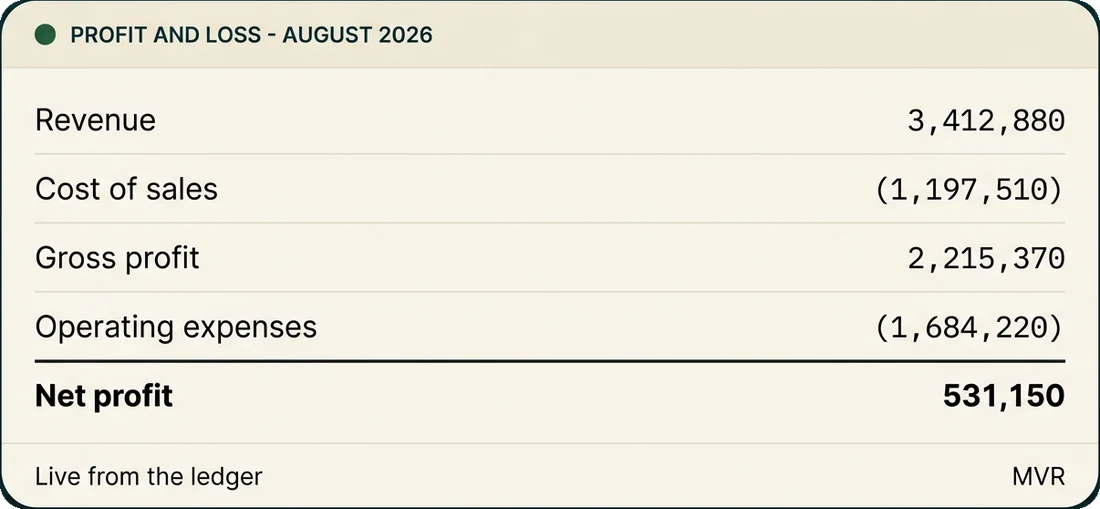
The P&L is current, because the ledger is.
Financial statements, management reports and saved views that read the live ledger. Schedule them, email them, export them.
Saved report views per role
Scheduled and emailed reports
PDF and spreadsheet export
Compare against plan on any cut of the business.
Budgets by account and dimension, with allocation rules that spread shared costs the way your business actually works.
Budget versus actual on any dimension
Allocation rules and scheduled runs
Project and department tracking
Depreciation that posts itself and a register that ties out.
Asset classes, schedules and disposals, with the depreciation journal posting to the ledger on the right day.
Asset classes and depreciation schedules
Automatic monthly depreciation posting
A register that reconciles to the ledger
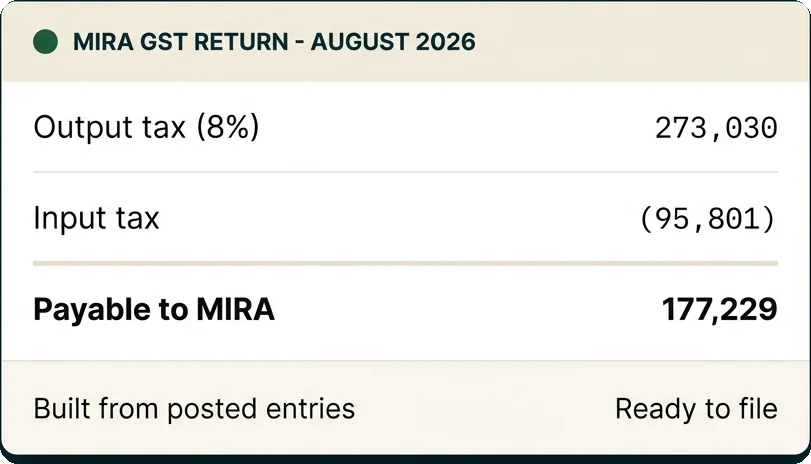
A filing-ready return, not a spreadsheet reconstruction.
Multi-rate tax handled at the line, a tax summary you can check, and a GST return built from the ledger rather than assembled at the deadline.
Multi-rate and mixed-supply handling
Input and output tax statements with supplier TIN
A return that traces back to source documents
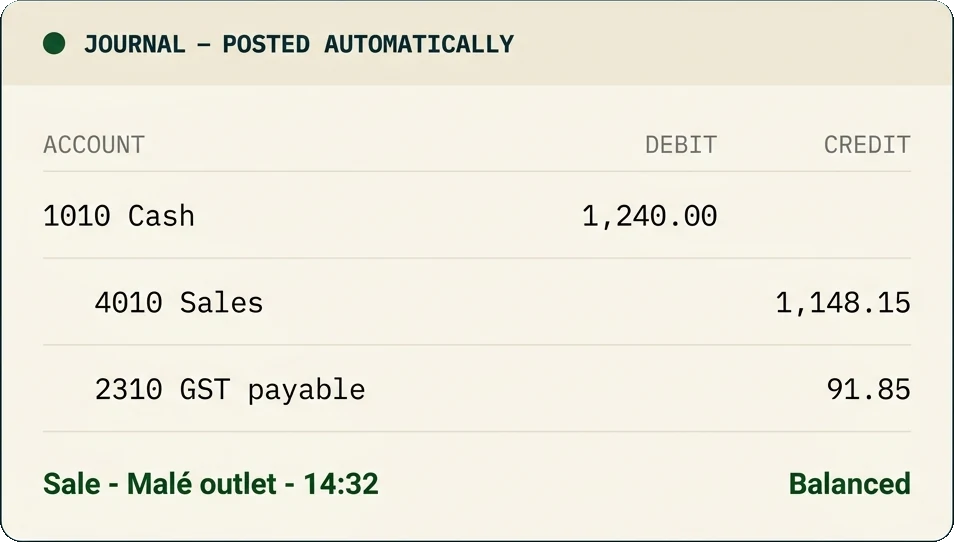
Ask in words. Every answer cites the entries behind it.
An agent that reads the ledger, answers the question you asked, and cites the journal lines behind the answer so you can check it.
Every answer cites the entries behind it
Anomaly detection across posted activity
Scoped to your organisation and your permissions